Memorial
Concept for an Anabaptist Memorial in Schleitheim
A memorial to the Schleitheim Anabaptist families and to Michael Sattler.
Relevance to today's Schleitheim Valley
Over a period of around 150 years, many residents of Schleitheim and Beggingen, as well as others from Schaffhausen, were condemned by the courts of Schaffhausen solely on account of their beliefs. Many citizens were fined, imprisoned, dispossessed and ultimately expelled by the authorities.
Numerous families from the Schleitheim Valley were expelled for "Anabaptism"
(Digital illustration / representative image)
Why a monument in Schleitheim?
A monument in Schleitheim is designed to represent and promote current values: peace, human rights, the protection of minorities, and a fundamental recognition of pluralistic coexistence. This is the concept behind a memorial to be built in the rural village of Schleitheim. For it was here, almost 500 years ago, that the Seven Articles of Schleitheim were drawn up, which still serve as the foundation for many Anabaptist communities today.
For around 150 years, the people of Schleitheim and many other families in Schaffhausen were persecuted and driven out – simply because they held differing beliefs. Visitors from all over the world often ask if there is a monument to the Anabaptists in the village.
These factors led the Schleitheim Local History Society to contemplate the idea of a monument.

Digital illustration, created using AI
Our Goals
Promotion of peace, dialogue and understanding: In times of global crisis, the commemorative event strengthens a culture of discussion based on mutual respect. It promotes open understanding, cooperation and social engagement across cultural and geographical boundaries, thus contributing to the common good.
Strengthening identity and social cohesion:
By examining the historical events in the Schleitheimer Valley 500 years ago – in particular the persecution and expulsion of local middle-class families – the event stimulates reflection on a common history. This historical anchoring strengthens the awareness of regional identity and connects locals and visitors.
Involvement of broad and diverse target groups: The commemorative event actively brings together local and international participants and involves them interactively. It commemorates the secret meeting in Schleitheim, where the historically significant seven Schleitheim articles were written, and allows for diverse cultural participation and participatory shaping.
Sustainable impact and long-term perspective:
The project provides a lasting stimulus for dialogue and understanding beyond the occasion. In the long term, Schleitheim should be made visible and positioned as a historically and spiritually significant place of the Anabaptist movement.
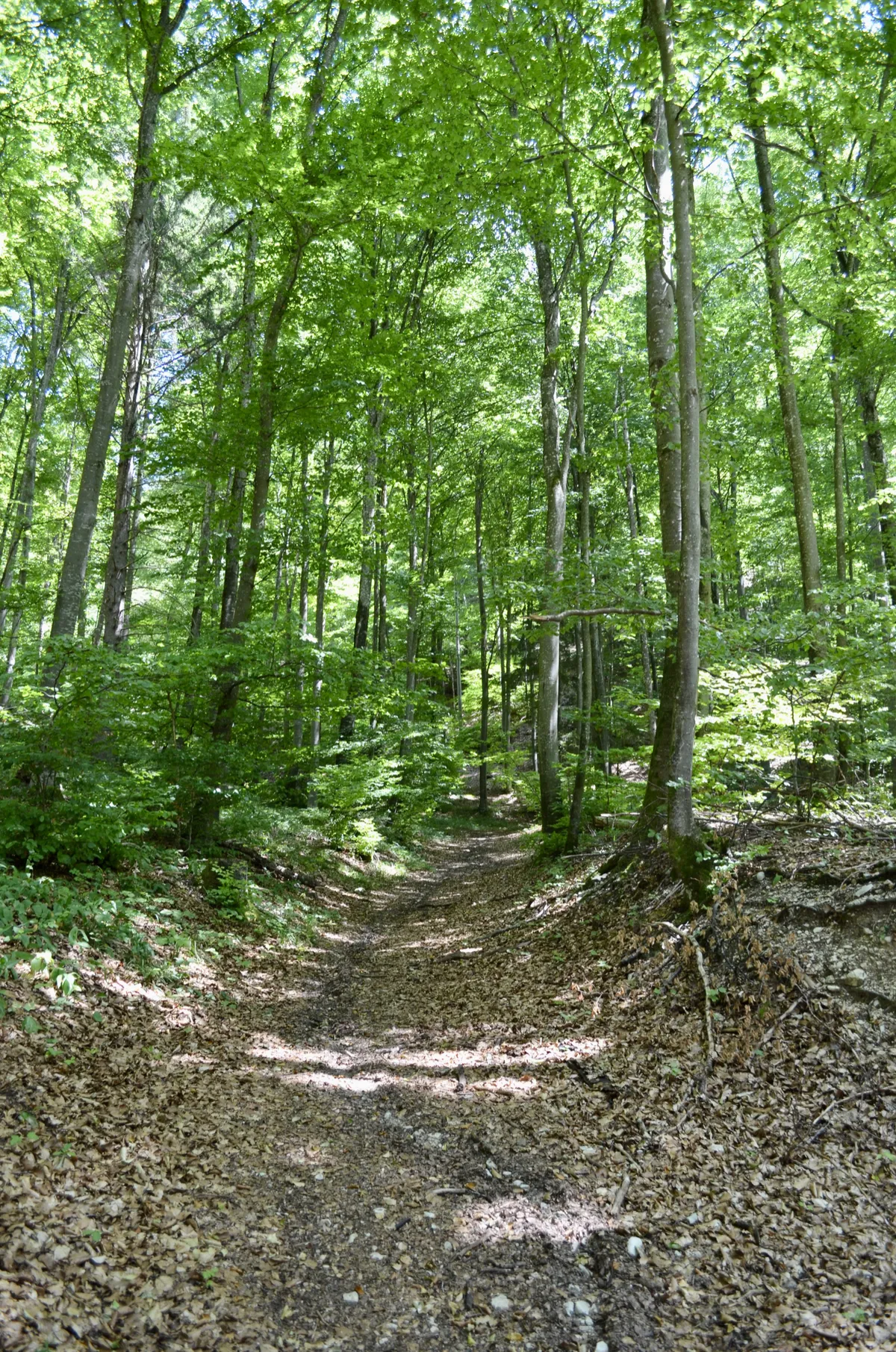
Digital illustration, created using AI
What are the aims and requirements for a monument in Schleitheim?
A public, eye-catching structure in a central location along the Anabaptist Trail (Täuferweg) within the Schaffhausen Regional Nature Park will commemorate the secret gathering in Schleitheim where the Seven Articles of Schleitheim were drafted 500 years ago.
Locals and visitors are to reflect on the turmoil of the Reformation, for it was here that local families were persecuted and driven out purely because of their beliefs: names still known today, such as Stamm, Bächtold, Wanner, Vogelsanger, Meier, Meyer, Peyer, Peter, Hess, Müller, Pletscher, Russenberger, Werner and others, are on record in relation to ‘Anabaptism’.
The memory of Michael Sattler, who is believed to be the author of the Schleitheim Confession, is to be preserved.
The monument is also intended to promote European values such as peace, human rights, the protection of minorities and the fundamental recognition of pluralistic coexistence.
Schleitheim place in history will become more visible and comprehensible to everyone, thereby also fostering a sense of identity among its residents.
The structure is intended to appeal to visitors through its simple language, thereby creating an intuitive connection.
Value of a Monument?
The monument will provide added value to the following groups:
Residents of Schleitheim (numerous villagers have Anabaptist names)
Visitors to the nature park
Anabaptists from around the world
Hikers in the Randen area
An online public
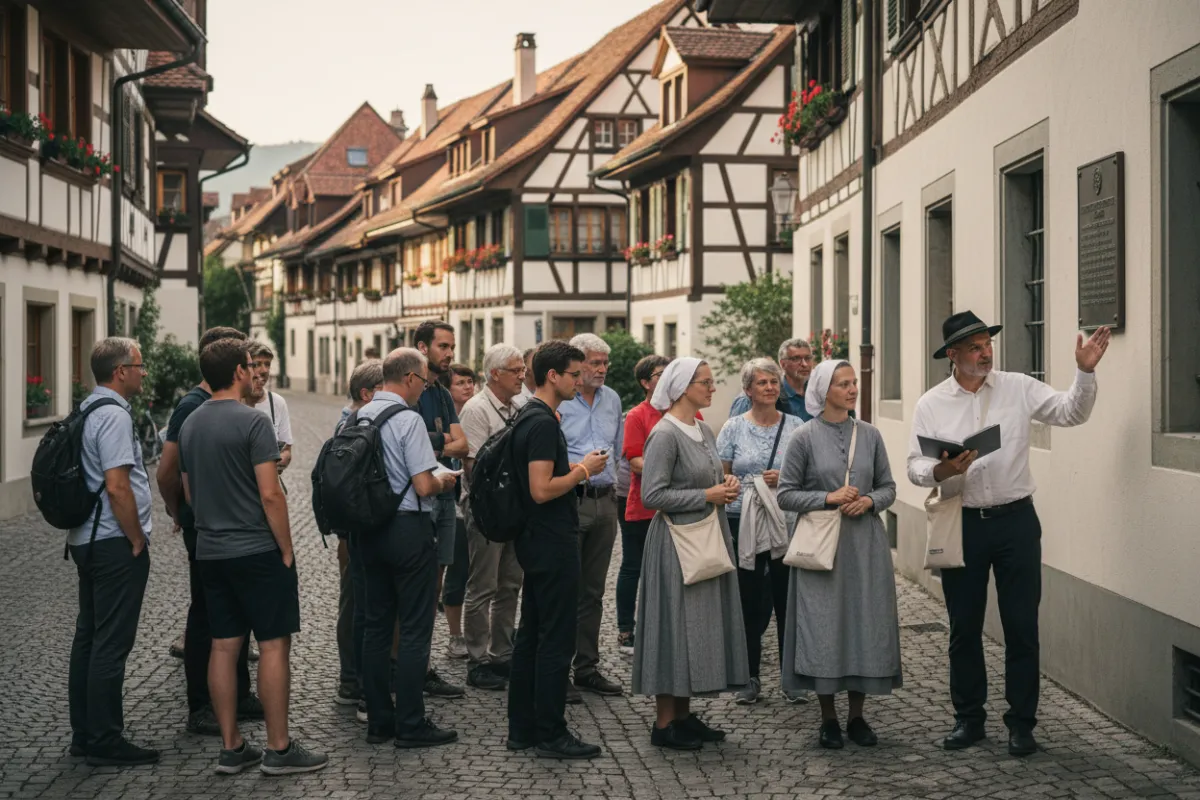
Digital illustration, created using AI
The ‘Schleitheim Ladder to Heaven’
The Schleitheim Ladder to Heaven is intended to symbolise the uncertain, arduous and perilous journey of Schleitheim Anabaptist families.
The presumed author of the Schleitheim Articles, Michael Sattler, rendered life-size and figuratively in bronze, balances on a sculptural, stylised ladder to heaven, surrounded by a crowd of onlookers. Michael Sattler is actually balancing “upside down”, looking away from the ladder; his journey is a different one, more difficult, more radical, more dangerous. He reaches his hand towards heaven in the hope that the Lord will help him, perhaps foreseeing his bleak future? Michael Sattler has exposed himself with his provocative text, and he is well and truly aware of this. Michael Sattler looks towards the Stauffenberg. Maybe a psalm in his thoughts? Perhaps Psalm 121 from the Sermon on the Mount: “I lift up mine eyes unto the hills - from whence cometh my help?”
Michael Sattler balances on a rung far below, almost on ground level, close to the men and women accompanying him. In the eyes of his enemies, however, Sattler stands high above, having become a threat, endangering their power: what if the entire population turns away from the worldly rulers? No more oaths of allegiance? No more mercenaries? No more taxes? No more power?
However, this is not solely about Michael Sattler. It is also about the many other people who, like him, were persecuted – and continue to be persecuted – because of their particular beliefs. Many people in Schleitheim were likewise fined, imprisoned, dispossessed and expelled.
The bottom rung invites visitors to climb up, allowing them to interact physically with it.
The aim is to represent a community, with Michael Sattler at its centre. Each visitor thereby becomes an intrinsic part of the monument. As a visitor, you become one with the Schleitheim Ladder to Heaven, part of its silhouette. Visitors have the opportunity to record the ever-changing group of people through photographs. History to touch, to participate in, to take away.
Interactive content about the Schleitheim Confession, the Schleitheim Anabaptists and Michael Sattler can also be accessed via a QR code: an e-guide to the monument featuring a tour, film, texts and images that also enable visitors to understand the broader context. In doing so, the aim is to shed light both on the idealised aspects and on the controversial ones. This contextualises the memorial and transforms it into a modern 24-hour mini-museum.
The people of Schleitheim who were forced into exile and Michael Sattler should serve as a reminder that we should be grateful for the values we enjoy today: peace, human rights, the protection of minorities, freedom of religion and the fundamental recognition of a pluralistic society.
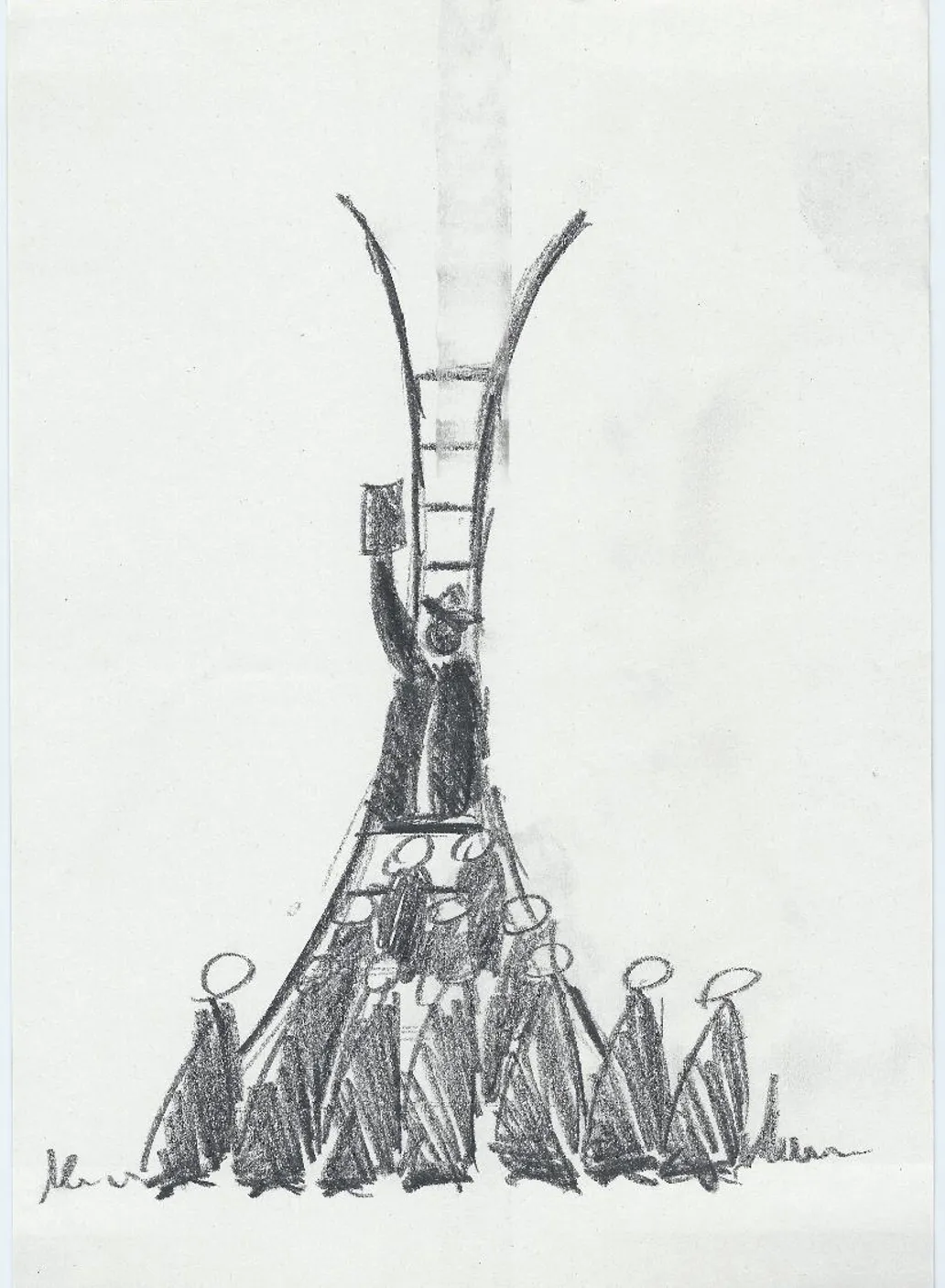
One of the first sketches of the
"Ladder to Heaven"
with a group of real visitors
Does a ladder belong to our Schleitheim?
The ladder should symbolise the uncertain, arduous, dangerous, yet hopeful journey through life that was forced upon the Anabaptists of an earlier time by the Schaffhausen authorities, including many families from Schleitheim.
A wooden ladder was found buried in the ground between Schleitheim’s church and the museum. It’s on display at the Schleitheimertal Museum (come and discover this ladder!).
‘E Zaane voll Saapfe d’ Laatere ab schlaapfe’ – a widely known saying that playfully showcases the Schleitheim dialect.
The ladder provides a safe way up or down.
A firm footing? A solid foundation?
Is there someone there to hold the ladder?
Or to knock it over, even into the fire?
A precarious balance!
Will the rungs hold?
What wood are the rungs carved from?
Climbing higher and higher – courage, balance.
A touch of anarchy, “leaving the earth”.
Non-violent, acrobat, escape, artist, writer?
The ladder as a symbol, upward, a path forward?
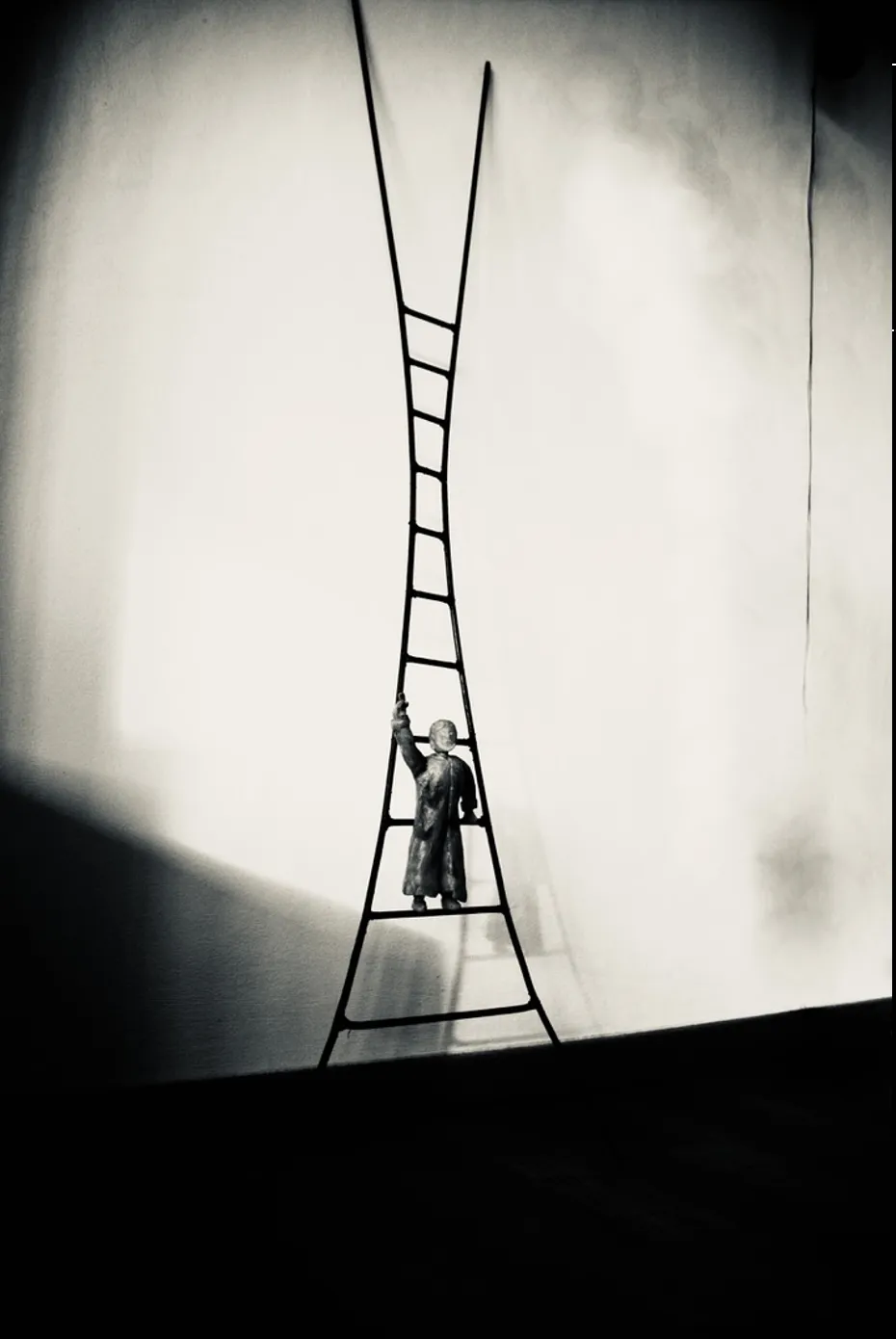
Model
Monument location
‘The location is just as important as the monument itself.’
A site has been identified between the old schoolhouse and the parish house that more than meets the requirements.
The ladder to heaven, situated as it will be in the village centre, should complement the Anabaptist stone on the Randen hill, becoming a memorial site for visitors right next to the museum.
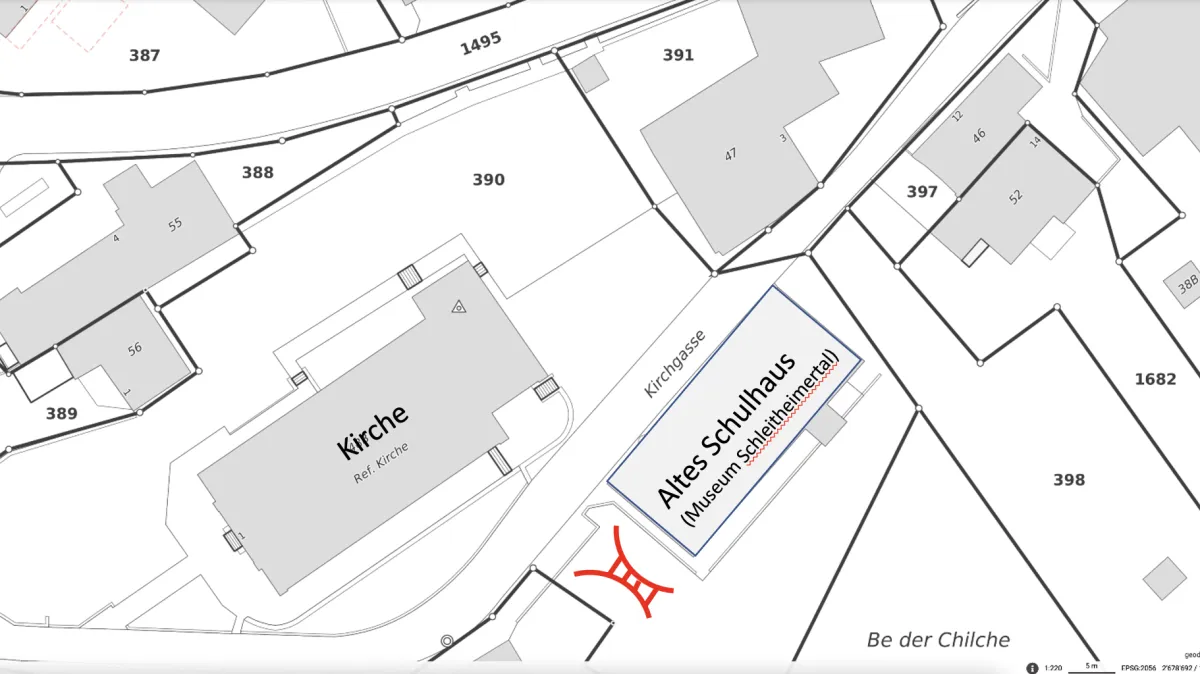
The proposed location of the Schleitheimer Himmelsleiter is marked in red (schematic sketch)
Funding
The monument will be largely funded by sponsors.
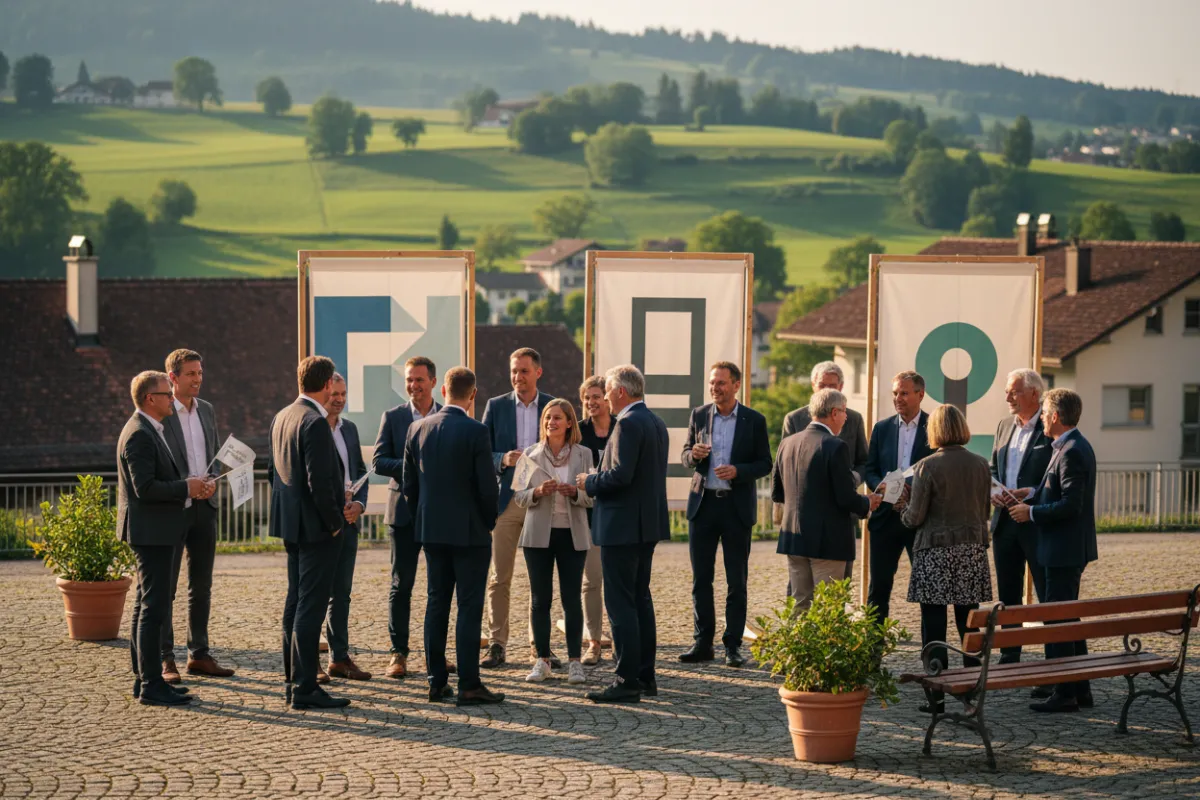
Digital illustration, created using AI
Frequently Asked Questions
Who will build the ladder to heaven?
Pletscher Metallbau, Beringen
Who is creating the figure?
Artist Beat Künzler, Schaffhausen
What do I gain as a sponsor?
As a sponsor, you will receive long-term exposure directly at the ladder to heaven and online. You will also benefit from a networking event with all sponsors, as well as other advantages. You can find the details in the ‘Sponsorship’ section.
How do I become a sponsor?
You can contact us via the contact form; we will then contact you by phone to inform you about the options.
Details can be found on the Sponsorship page.
Initiator
The Schleitheim Association for Local History works to promote and preserve local cultural heritage and historical knowledge. The association was founded in 1889.
Home | Attractions | Events | Monument | Become a Sponsor | Register | Volunteer | About Us | Contact | DISCLAIMER | © 2026 - 500 Years of the Schleitheim Confession